

Marine Science Minor
The Marine Science Minor will provide you with unique hands-on learning opportunities that will set you apart as you begin your career.
This program covers foundational concepts and contemporary issues in marine science related to geology, physics, chemistry, biology of the oceans and our coasts. You will learn to evaluate complex interactions in marine systems and the ways in which humans impact the oceans and are impacted by the oceans. You will use the scientific method as you develop your skills with common laboratory, field techniques and equipment to solve marine science related problems.
This program provides students an excellent foundation for the workforce or graduate school.
Workforce projections show that jobs will be available in a growing number of industries, governmental agencies, educational organizations, non-profits, and within both commercial industries and consulting arenas. Graduates are positioned to work in geoenvironmental and biological sciences, coastal development, land use and resource management, environmental engineering, marine research, education, international relations, aquariums, aquaculture and fisheries, and more.
You should expect to be in the field collecting raw data that will be analyzed in the laboratory or lecture setting. You’ll find yourself on boats and kayaks, and in the mud!
Students should contact:
Dr. Sean Cornell in Geography-Earth Science
srcornell@ship.edu
(717) 477-1310
Field Work Opportunities
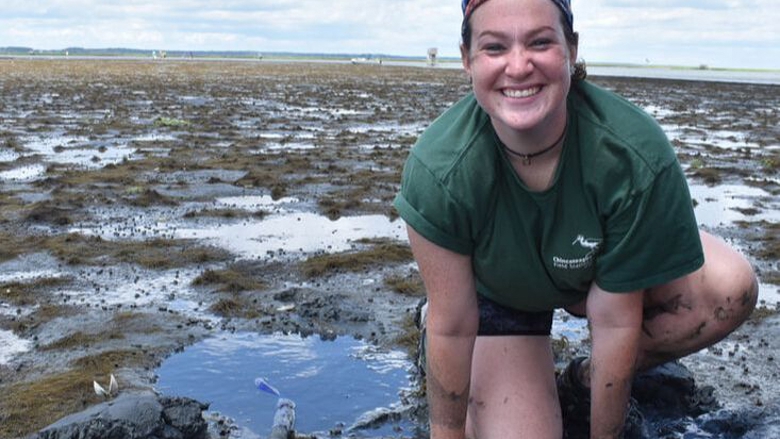
Chincoteague Bay Field Station at Wallops Island, Virginia
Faculty from our member universities and independent investigators from other universities and organizations are eligible to conduct research utilizing CBFS resources and partnerships. We are able to provide the support that is needed including housing, equipment, lab space, assistance with permits, making arrangements with partner organizations, and potential access to Wallops Island.
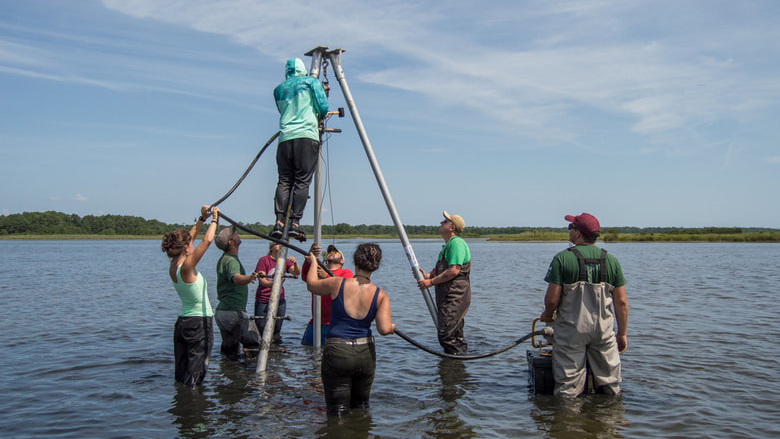
Summer Courses Available
Registration for Summer 2027 opens in January.
Course Work for Marine Science Minor
To complete a minor in marine science, you mush complete 19 credits in the following areas:
- Biology
- Geography
- Earth science
You must also complete six credits (two courses) at the Chincoteague Bay Field Station or in another approved field course. Students are required to complete a capstone experience which can be a course-based capstone, a research-based capstone, or an internship-based capstone.